Why Do So Many African Flags Share the Same Colours?
23 Aug 20265 min read
There are no two identical national flags in the world, but some come uncomfortably close. Here are ten pairs that fool almost everyone, and the one detail that separates each.
There is a reassuring rule in vexillology: no two sovereign states fly exactly the same flag. Every design is, in principle, distinctive.
In practice, that principle is doing a lot of heavy lifting. Some flags differ by a shade of blue. Others by a ratio you cannot perceive without a ruler. A few are the same three colours simply stacked in the opposite order. If you have ever hesitated at an Olympic opening ceremony, you were not being careless, you were running into some genuinely hard design problems.
Here are the ten pairs that cause the most trouble, and the single detail that resolves each one.
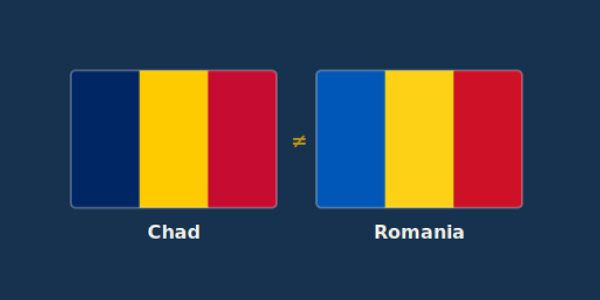
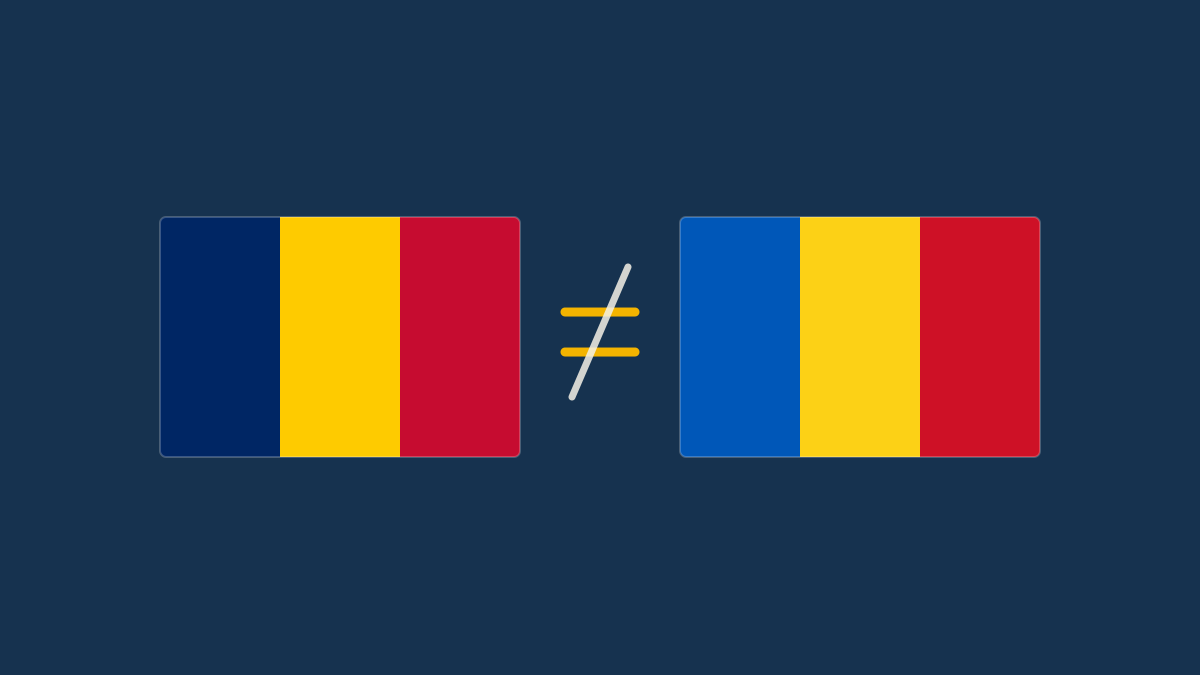
This is the hardest pair on the list, and it is not close. Both flags are vertical tricolours of blue, yellow and red, in the same order, at the same 2:3 ratio. The only difference is the blue: Chad's is a deeper indigo, Romania's a brighter cobalt.
Placed side by side, you can just about see it. Photographed separately, under different light, on different fabric, you cannot. The official specifications put Chad at Pantone 281 and Romania at Pantone 280.
Romania's tricolour traces back to the revolutionary movements of 1848. Chad adopted its own on 6 November 1959, shortly before independence. The two became near-identical only in December 1989, when Romania removed the socialist coat of arms that the Ceaușescu regime had placed in the centre band. Chad raised the matter at the United Nations in 2004; Romania declined to change, citing more than a century of prior use.
How to tell: you mostly can't. If the blue looks almost navy, lean Chad.
Mnemonic: Chad = charcoal. Both start with "ch", and Chad's is the charcoal-tinted, darker blue.
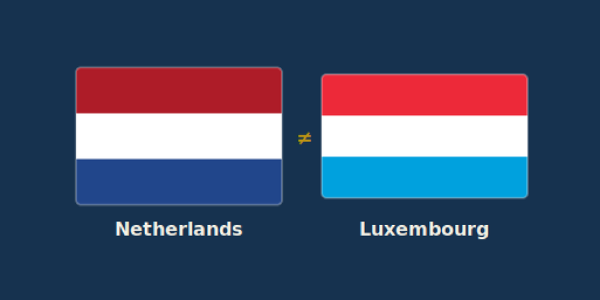
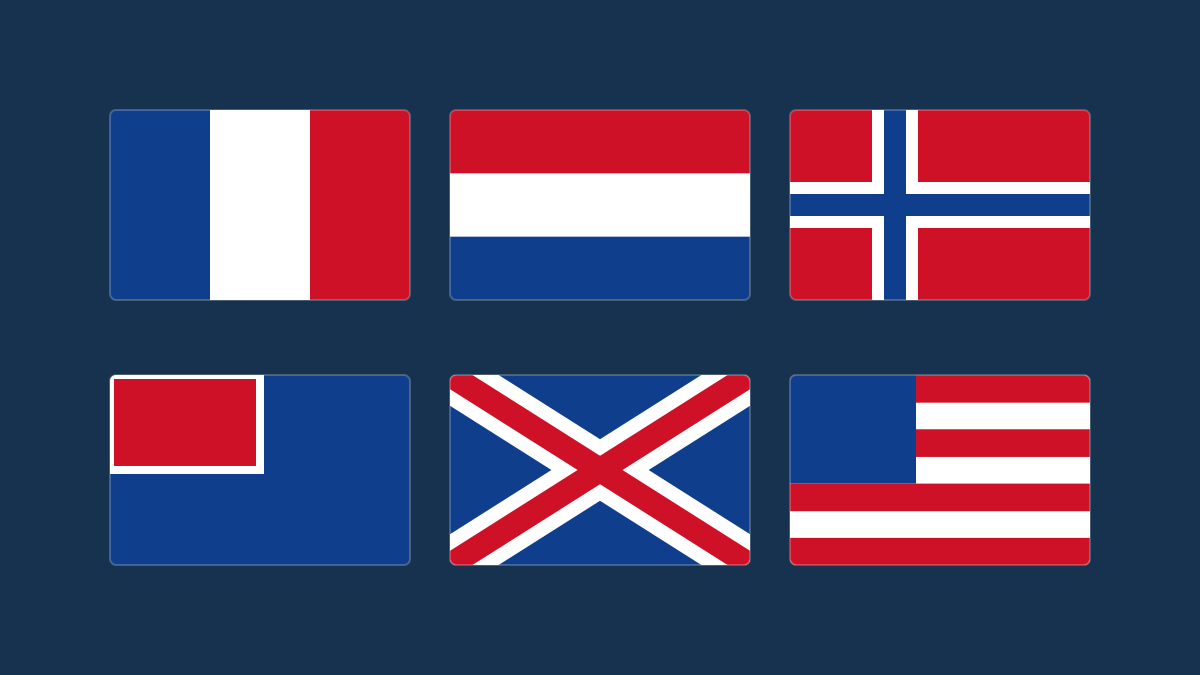
Two horizontal tricolours, red on top, white in the middle, blue at the bottom. The Dutch blue is a deep cobalt; Luxembourg's is a noticeably lighter sky blue. The proportions differ too: the Netherlands flies 2:3, Luxembourg 3:5, but nobody is measuring at a football match.
How to tell: pale blue means Luxembourg. Dark blue means the Netherlands.
Mnemonic: Lux = light. Luxembourg's name stars with Lux, and its blue is the light one.
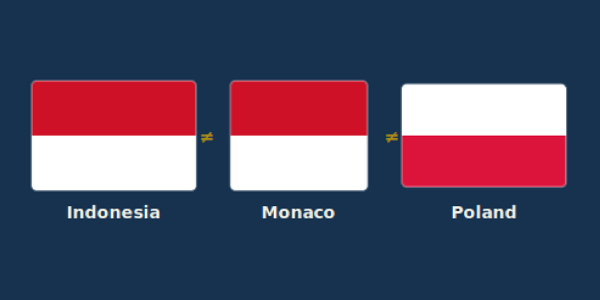
Indonesia and Monaco are both simply red over white. The difference is proportion: Monaco is a stubby 4:5, Indonesia a wider 2:3. That is it. Both countries claim considerable historical seniority and neither has any intention of changing.
Poland belongs in this cluster too, but is easier: it is white over red, the exact inverse.
How to tell: white on top is Poland. Red on top and squarish is Monaco. Red on top and wide is Indonesia.
Mnemonic: Monaco is micro. The world's second-smallest country gets the stubbiest flag; Indonesia, strung out across thousands of islands, gets the long one. And Poland? The snow sits on top.
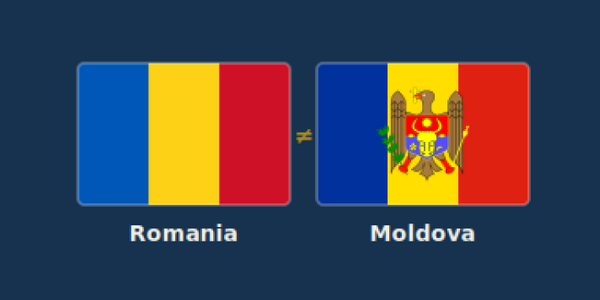
Moldova uses the same blue-yellow-red vertical tricolour as Romania, reflecting a shared language and history. The difference is an emblem: Moldova carries a golden eagle holding a shield in the center band. Strip that away and the two are effectively the same flag.
How to tell: eagle in the middle means Moldova. Nothing in the middle means Romania.
Mnemonic: Moldova = medal in the middle. Three M's, one emblem. Romania keeps its middle empty.
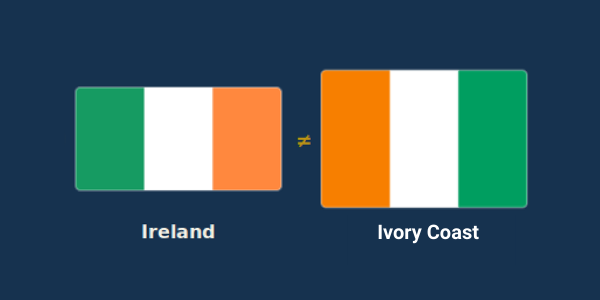
Both are vertical tricolours of green, white and orange. Ireland runs green at the hoist, orange at the fly. Ivory Coast runs orange at the hoist, green at the fly. Exactly reversed.
The colours mean entirely different things: in Ireland, green for the Gaelic tradition, orange for Protestant Ulster, white for peace between them; in Ivory Coast, orange for the savannah, green for the forests.
How to tell: green nearest the flagpole is Ireland.
Mnemonic: Ireland is the Emerald Isle, so green leads the way. It is also the longer of the two, 1:2 against Côte d'Ivoire's 2:3. A long green island, a long green-first flag.
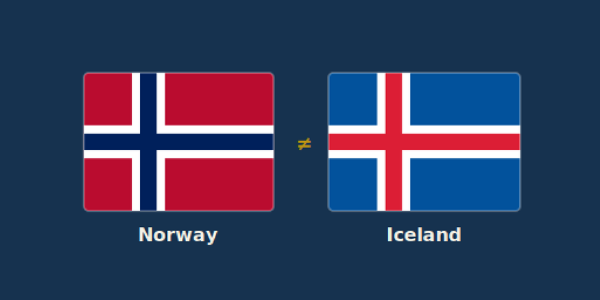
Both are Nordic cross flags with three colours: red, white and blue. Norway is a red field with a blue cross outlined in white. Iceland is a blue field with a red cross outlined in white. The white is the outline in both cases; the field and the cross simply trade places.
How to tell: red background, Norway. Blue background, Iceland.
Mnemonic: Iceland is icy. Ice is blue, so the blue field belongs to Iceland. Norway gets the warm one.
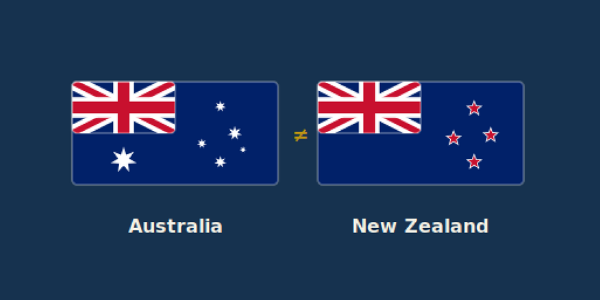
Both fly the Union Jack in the canton and the Southern Cross in the fly. New Zealand shows four red stars with white borders. Australia shows six white stars: the five of the Southern Cross plus the large seven-pointed Commonwealth Star beneath the Union Jack.
How to tell: red stars, New Zealand. White stars and one extra big one, Australia. The debate over the similarity is old enough that New Zealand held a two-round national referendum on changing its flag in 2015–16 and voted to keep it.
Mnemonic: Six stars, six states. Australia has six states and six stars. New Zealand stops at four and paints them red. (The six-and-six is a handy coincidence, not the official symbolism.)
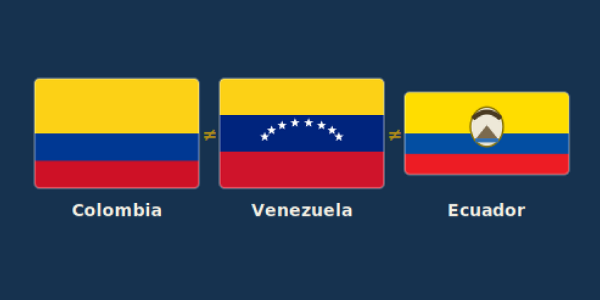
All three are yellow, blue and red horizontal tricolours with an oversized yellow band. That is not coincidence: all three were part of Gran Colombia, the federation founded by Simón Bolívar that existed from 1819 to 1831, and all three kept its colours after it dissolved.
Colombia's is plain. Venezuela adds an arc of eight white stars. Ecuador adds its coat of arms, a condor over a mountain and a steamship, in the centre.
How to tell: nothing added, Colombia. Stars, Venezuela. Busy coat of arms, Ecuador.
Mnemonic: Colombia is El Dorado. The land of gold gives yellow half the flag. Venezuela splits its three bands evenly and adds the stars.
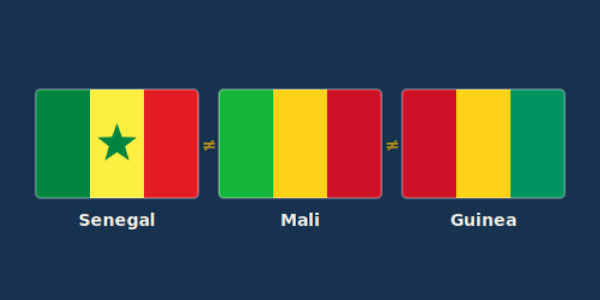
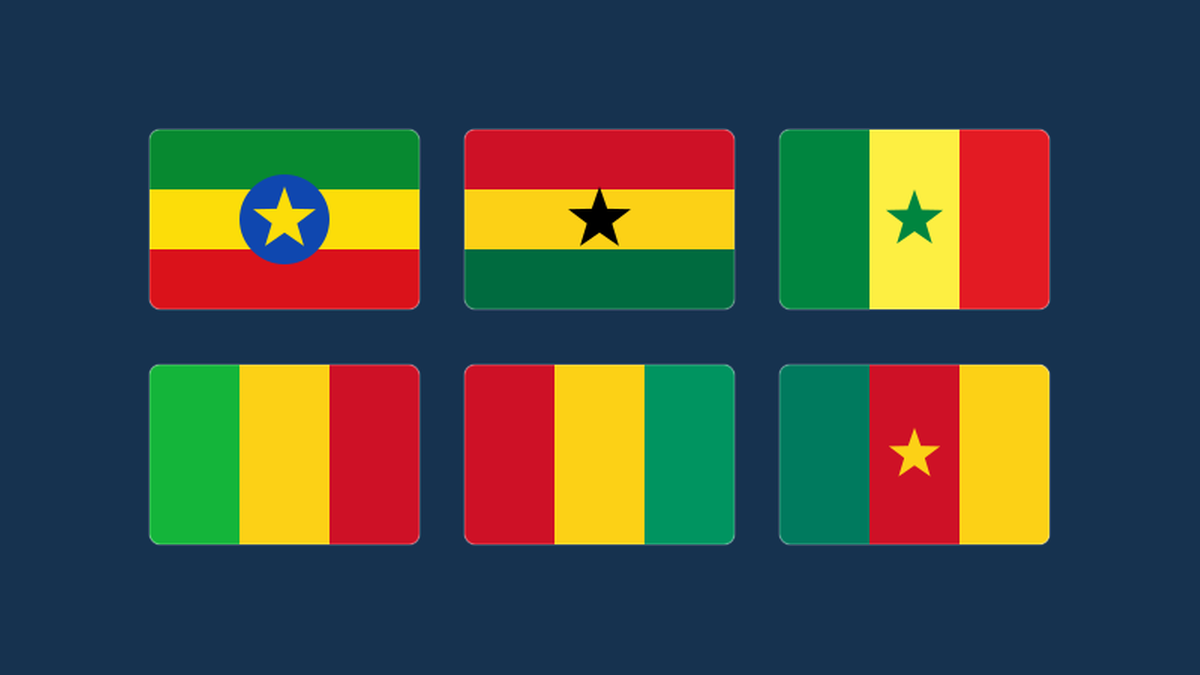
All three are vertical tricolours in the pan-African colours of green, yellow and red. Senegal and Mali share the same order: green, yellow, red but Senegal adds a green five-pointed star in the centre. Guinea reverses the order entirely: red, yellow, green.
How to tell: star in the middle, Senegal. No star, Mali. Red nearest the pole, Guinea.
Mnemonic: Senegal has its star. Two S's, one star. Mali has none, and Guinea runs backwards.
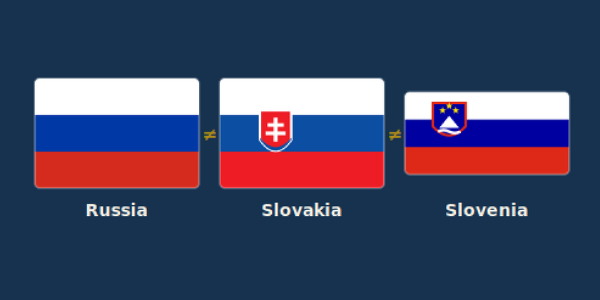
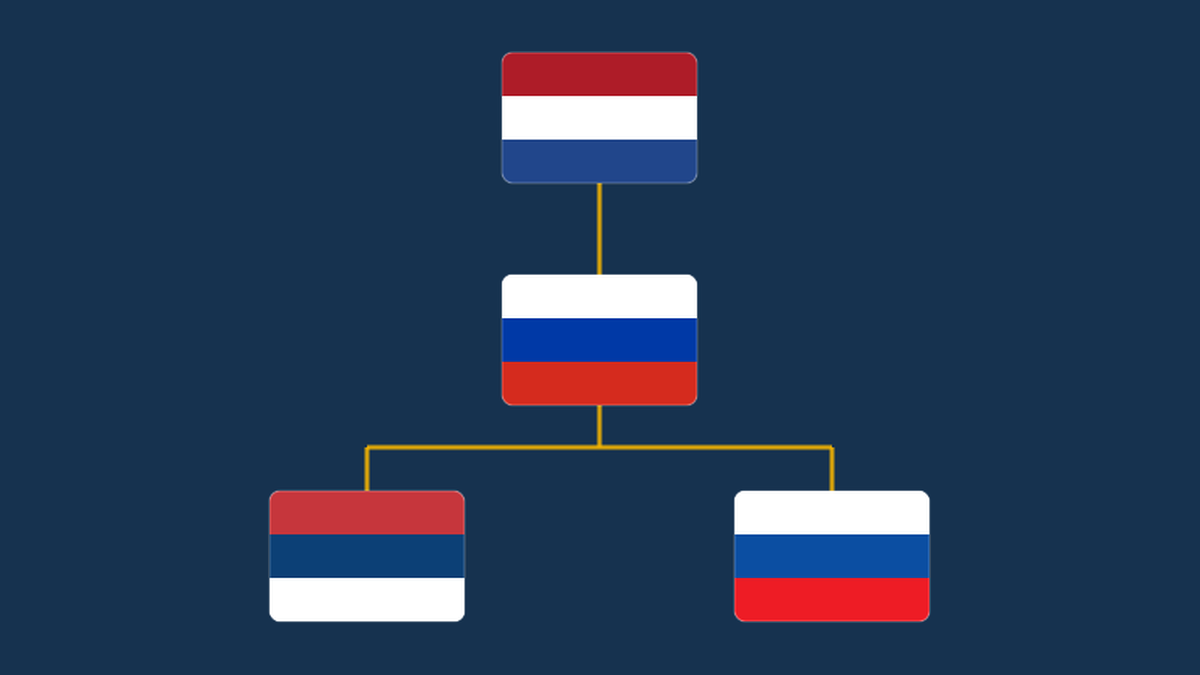
White, blue and red horizontal bands, in that order, on all three. Russia flies them plain. Slovakia and Slovenia each add a coat of arms but in different places and with different content. Slovakia's sits near the hoist and shows a white double cross on three blue hills. Slovenia's sits in the upper hoist corner and shows Mount Triglav with three stars above.
How to tell: no emblem, Russia. Double cross, Slovakia. Mountain, Slovenia.
Mnemonic: Slovakia = shield, Slovenia = summit, Russia = raw. An escutcheon, a mountain, or nothing at all.
Almost every collision on this list has a cause, and it is rarely coincidence.
Some pairs are families. The pan-Slavic colours descend from the Russian tricolour; the pan-African colours from Ethiopia, which kept its independence through the era of European partition; the Gran Colombia trio from a single federation that broke into three. These flags resemble each other because the countries chose to signal kinship. The resemblance is the message.
Other pairs are accidents of a small design space. If you restrict yourself to three horizontal bands and the handful of colours that dye well and read clearly at distance, the number of possible flags is not large. Chad and Romania did not copy each other. They arrived at the same place independently, from opposite ends of the world.
And a few are simply the cost of good design. The North American Vexillological Association's guidance is to keep flags simple, limit the palette, avoid lettering and use meaningful symbolism. Follow those rules faithfully and you converge on a small set of strong solutions, which is exactly how you end up with neighbours who look like siblings.
Distinctiveness, it turns out, is the hardest of the design rules to satisfy. It is also the one that matters most when a flag is flying at the far end of a stadium.
Keep exploring