Four Colours, One Revolt: Where the Pan-Arab Colours Come From
15 Aug 20264 min read
Green, yellow, red. Across Africa, these three colours appear again and again. Their story leads back to Ethiopia, a victory that became a symbol, and the African independence movements of the 20th century.
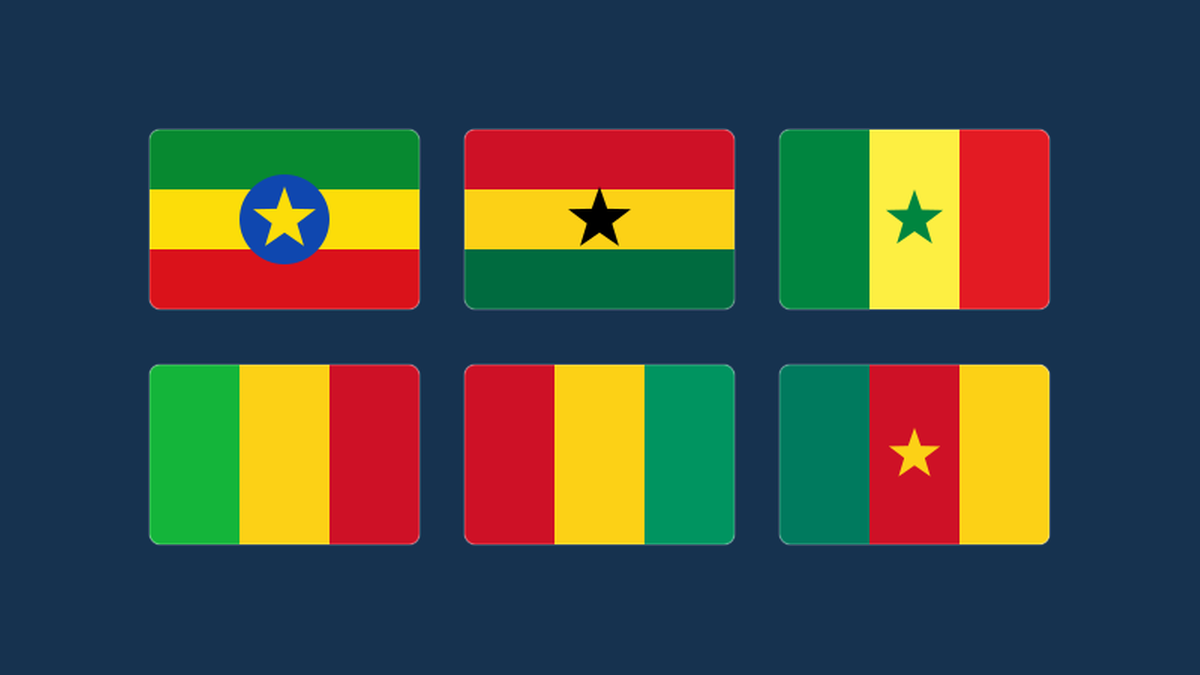
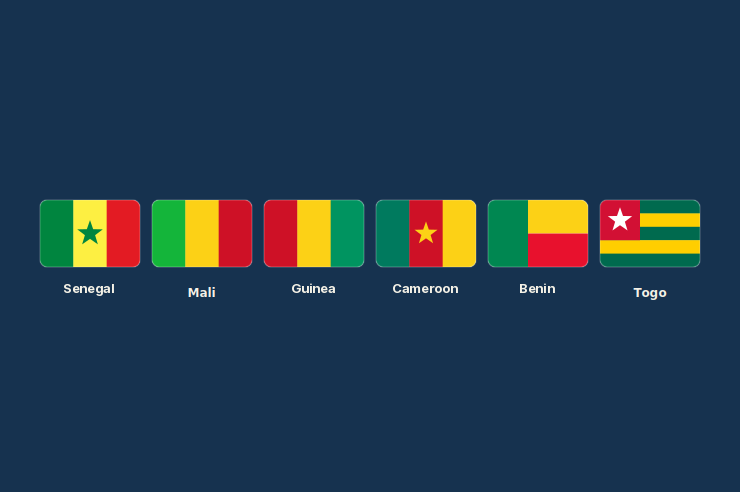
Scan the flags of the African continent and one trio of colours keeps returning: green, yellow or gold, and red. Senegal, Mali, Guinea, Ghana, Cameroon, Benin and many others fly them.
Today, they are recognised as one of the two main sets of Pan-African colours. But why these three? And how did they end up on so many national flags?
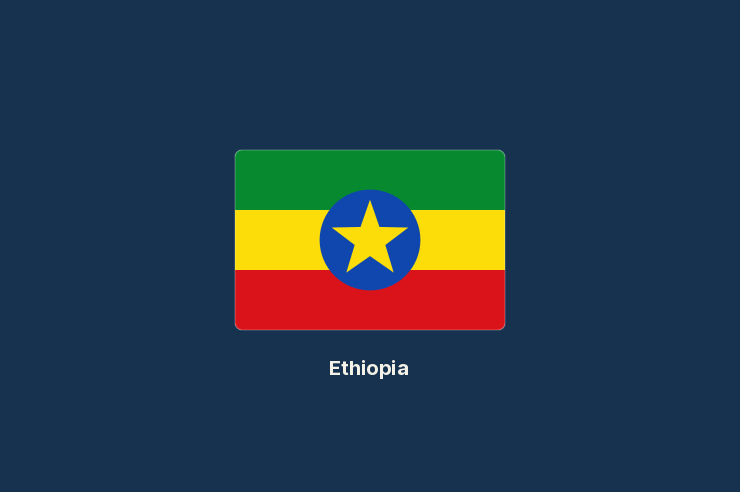
To find their origins, we have to look towards Ethiopia. Green, yellow and red had been used there for centuries, while the modern tricolour emerged under Emperor Menelik II in 1897.
But if these colours came to mean something far beyond Ethiopia's borders, it was largely because of the country's remarkable history.
As European powers divided almost the entire African continent among themselves in the late 19th century, Ethiopia managed to preserve its independence. It would later be occupied by Fascist Italy between 1936 and 1941, but remained, alongside Liberia, one of the very few African states to escape lasting European colonisation.
On a continent almost entirely under foreign rule, Ethiopia therefore became a powerful symbol of African sovereignty.
And so did its colours.
One event dramatically strengthened that status.
On 1 March 1896, near the town of Adwa, the Ethiopian army of Emperor Menelik II faced an Italian force seeking to impose Italian control over the country. The battle ended in a decisive Ethiopian victory.
At a time when European powers were expanding their control across almost the entire continent, an African army had inflicted a spectacular defeat on a European colonial power.
Italy subsequently recognised Ethiopian sovereignty in the Treaty of Addis Ababa.
The significance of Adwa quickly spread beyond Ethiopia's borders. The victory became a symbol of resistance to colonial domination and would later occupy an important place in Pan-African thought.
A year after the battle, in 1897, Menelik II adopted a rectangular flag bringing together Ethiopia's three colours: green, yellow and red.
Several decades later, Africa entered the age of independence.
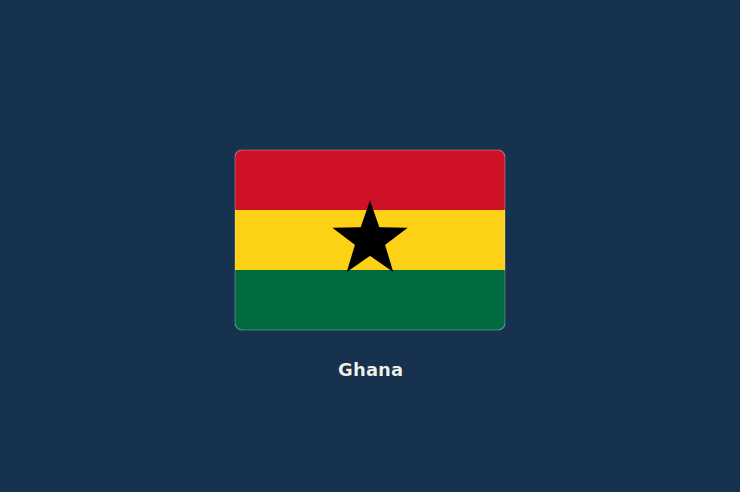
On 6 March 1957, Ghana, formerly the British colony of the Gold Coast, became independent. Its new flag was designed by Ghanaian artist and teacher Theodosia Okoh.
She chose three horizontal bands of red, gold and green, with a black star at their centre.
The colours tell the country's story: red recalls the blood shed in the struggle for independence, gold represents its mineral wealth, and green its forests and natural resources.
But their combination also placed Ghana within the Pan-African tradition associated with Ethiopia.
At the centre sits another powerful symbol: the Black Star.
It notably echoes the Black Star Line, the shipping company founded in 1919 by Jamaican activist Marcus Garvey. The Black Star had become a symbol of African emancipation and unity between Africa and its diaspora.
Ghana would make it one of its national symbols.
Ghana's choice came at a decisive moment.
From the late 1950s and particularly throughout the 1960s, independence swept across Africa. Many of the new states also chose green, yellow and red.
Guinea, Mali, Senegal, Cameroon, Benin and Togo all adopted different combinations of these colours.
Each country gave them its own meaning and arranged them in its own way, but a common visual identity gradually emerged.
Ghana's influence can itself be seen in later flags. The flag of Guinea-Bissau, adopted when the country proclaimed independence in 1973 and derived from that of the PAIGC independence movement, combines red, yellow and green with a black star. The movement's flag had itself drawn on the Pan-African colours already used by Ghana and neighbouring Guinea.
Within a few decades, colours associated with Ethiopian resistance had become part of the visual language of independent Africa.
But there is another Pan-African tradition, born on the other side of the Atlantic.
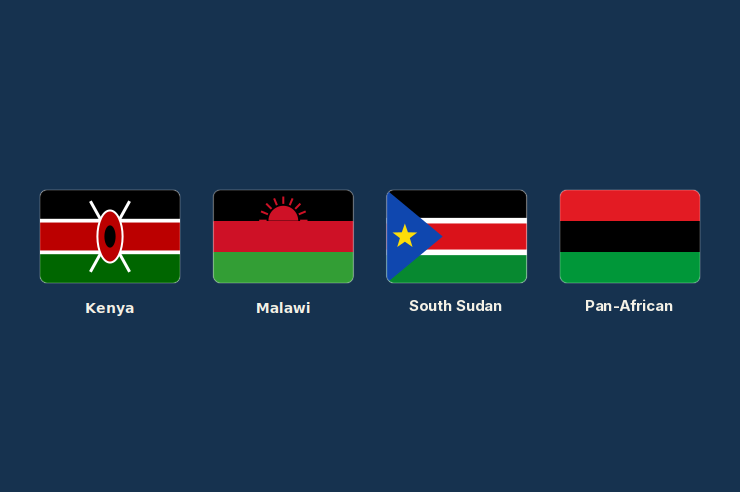
In 1920, in New York, Marcus Garvey's Universal Negro Improvement Association formally adopted a flag made up of three horizontal bands: red, black and green.
It was conceived as a common symbol for people of African descent and gradually became known as the Pan-African flag.
This second palette also became firmly established in Pan-African imagery. Red, black and green can notably be found on the flags of Kenya, Malawi and South Sudan, sometimes alongside other colours.
There is no single universal meaning: each country officially defines the symbolism of its own flag.
Certain ideas, however, appear again and again.
Green commonly represents the land, vegetation, agriculture or hope. Yellow and gold often evoke sunshine or natural wealth. Red frequently recalls sacrifice and the blood shed for independence. Black, when present, can represent the people of Africa.
Two traditions therefore came together in the history of Pan-Africanism.
On one side, the green, yellow and red of an Ethiopia that became a symbol of resistance to colonial domination. On the other, the red, black and green of Marcus Garvey's movement and the African diaspora.
Two different histories, but a shared ambition: to turn colour into a symbol of unity, sovereignty and emancipation.
Behind a few simple bands of colour lies a remarkable part of the political history of an entire continent.
Keep exploring