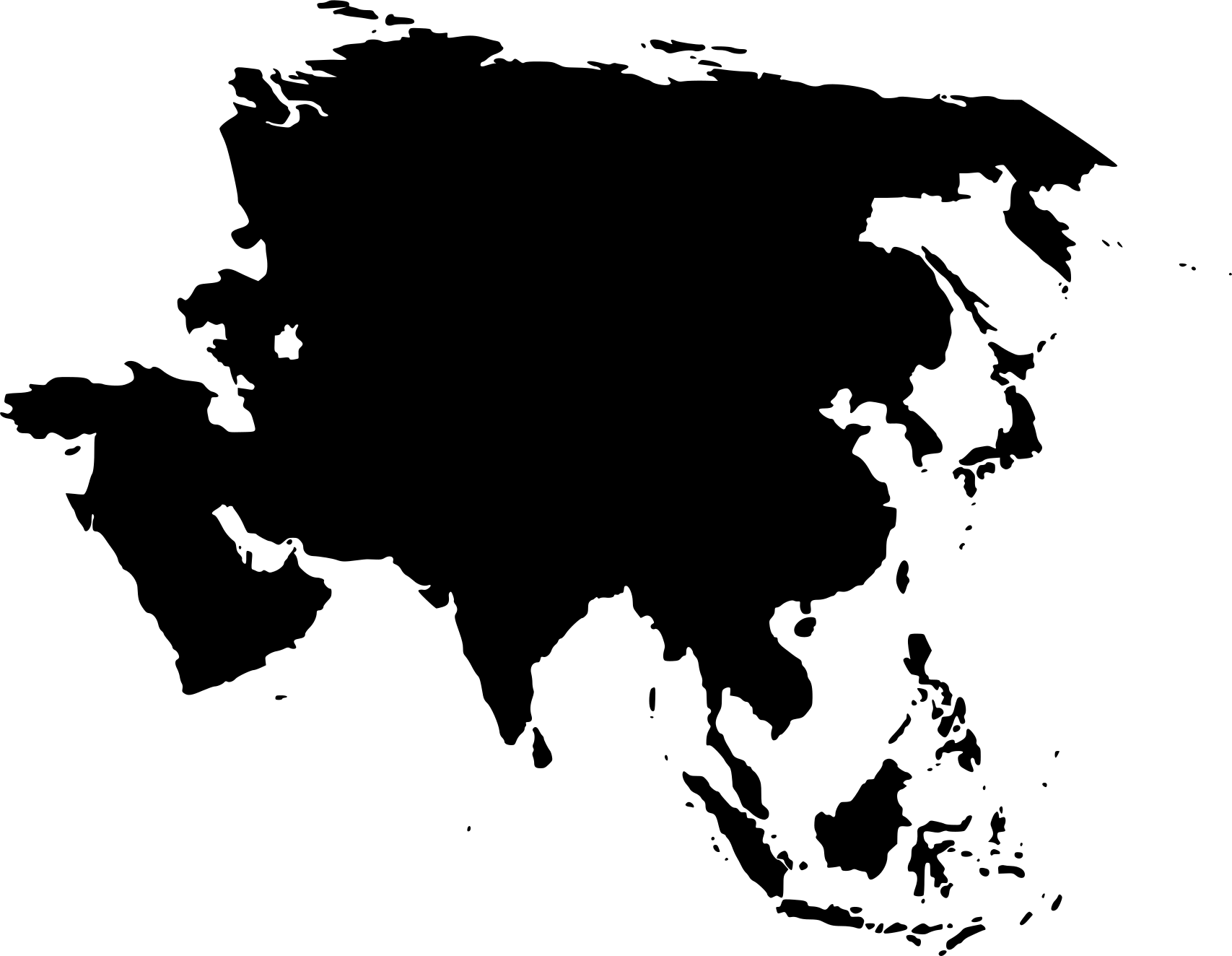
Asia
Adoption
Specs plus what each color and emblem means on this flag — tap an element to reveal its meaning.
Proportions
2:3
Shape
Rectangular
Colors
#FFFFFFThe white field, a traditional colour of the country, stands for peace and purity.
#CD2E3A · Pantone 186 CRed, the upper half of the central circle, represents yang (force, light).
#0047A0 · Pantone 286 CBlue, the lower half of the circle, represents yin (calm, shade); together they express the balance of all things.
#000000The four black trigrams represent heaven, earth, water and fire, and the balance among them.
Symbols & elements
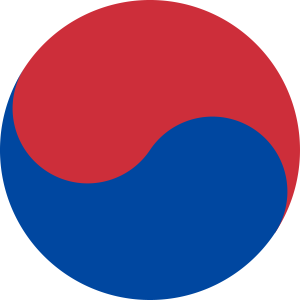
The central disc divides into red above and blue below: yang and eum, the two complementary forces whose interaction produces balance and harmony in the universe.

Three unbroken bars, in the upper hoist. The trigram of heaven, associated with spring, the east and the virtue of humanity. Being the most yang of the four, it faces the red half of the taegeuk.

A broken bar between two solid ones, in the lower hoist. The trigram of fire, linked to autumn, the south and the virtue of propriety.
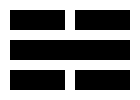
A solid bar between two broken ones, in the upper fly. The trigram of water, linked to winter, the north and the virtue of wisdom.
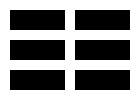
Three broken bars, in the lower fly. The trigram of earth, associated with summer, the west and the virtue of righteousness. The most eum of the four, it sits opposite Geon in a deliberate symmetry.
Construction details
Proportions 2:3. A white field bearing at its centre a red and blue circle, the taegeuk, representing the balance of yin and yang. At the four corners, four black trigrams drawn from an ancient book of changes represent heaven, earth, water and fire.
Construction sheet
How the flag should be used and displayed with respect.
Specific rules — South Korea
Common conventions
At its centre, a red and blue circle represents the balance of yin and yang, the origin of all things.
Can you recognize this flag in Flag Reveal?