22 July 1947 (adopted by the Constituent Assembly, 79 years); hoisted on 15 August 1947.
Designed byBased on the Swaraj flag by Pingali Venkayya; final version attributed to Surayya Tyabji.
Design & Symbolism
Specs plus what each color and emblem means on this flag — tap an element to reveal its meaning.
Proportions
2:3
Shape
Rectangular
Colors
Orange#FF9933 · Pantone 165 C
Saffron symbolises courage, sacrifice and renunciation.
White#FFFFFF
White represents peace and truth.
Green#138808 · Pantone 362 C
Green evokes faith, fertility and the prosperity of the land.
Blue#000080 · Pantone 2758 C
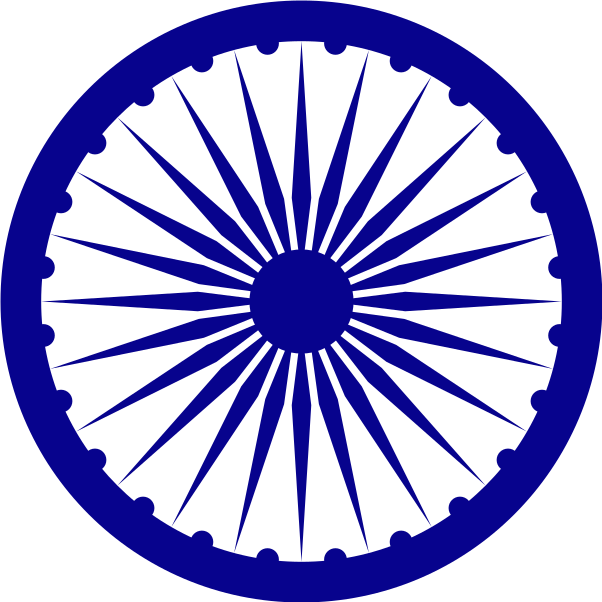
Navy blue is the colour of the central Ashoka Chakra.
Symbols & elements
Ashoka Chakra
The navy-blue wheel of law, taken from the third-century BC Lion Capital of Ashoka. Its twenty-four spokes stand for the hours of the day and the idea that a nation must keep moving; stagnation is death.
Construction details
Proportions 2:3. Three equal horizontal bands, saffron, white, green, with the Ashoka Chakra, a navy-blue 24-spoke wheel, at the centre. The wheel comes from a pillar of Emperor Ashoka, in the 3rd century BC.
Construction sheet
Etiquette & protocol
How the flag should be used and displayed with respect.
Specific rules — India
A strict flag code governs its use; it must be made of a hand-spun cloth (khadi).
The flag is honoured on 15 August (Independence Day) and 26 January (Republic Day).
Common conventions
Keep the flag clean and never let it touch the ground.
Never fly a torn or faded flag — repair or replace it.
Illuminate the flag if it stays up at night.
Never use the flag as clothing, packaging or advertising.
Dispose of a worn flag respectfully, not in the trash.
Did you know?
The central wheel, the Ashoka Chakra, has twenty-four spokes and comes from a pillar of Emperor Ashoka, in the 3rd century BC; it speaks of dharma and eternal motion.