Africa
Quick Facts
Capital
Population
Area
Density
Median age
Adoption
Specs plus what each color and emblem means on this flag — tap an element to reveal its meaning.
Proportions
1:2
Shape
Rectangular
Colors
#CE1126 · Pantone 186 CRed recalls the blood shed in the struggle for independence.
#FCD116 · Pantone 116 CYellow depicts the African sun, the savanna and the fruits of labour.
#009E49 · Pantone 355 CGreen evokes the forests and farmland.
#000000The black star, the 'star of Africa', symbolises Pan-Africanism and the leadership of the liberation movement.
Symbols & elements
The black star of African unity and dignity, taken from the flag of the PAIGC independence movement.
Construction details
Proportions 1:2. A vertical red band at the hoist, bearing a black five-pointed star, and two horizontal bands, yellow on top and green below, over the rest of the flag. These are the Pan-African colours, like Ghana's.
Construction sheet
How the flag should be used and displayed with respect.
Specific rules — Guinea-Bissau
Common conventions
It is essentially the liberation party's flag, adopted the very day independence was proclaimed, a year before Portugal recognised it.
Can you recognize this flag in Flag Reveal?
On the blog
One article covers this flag.
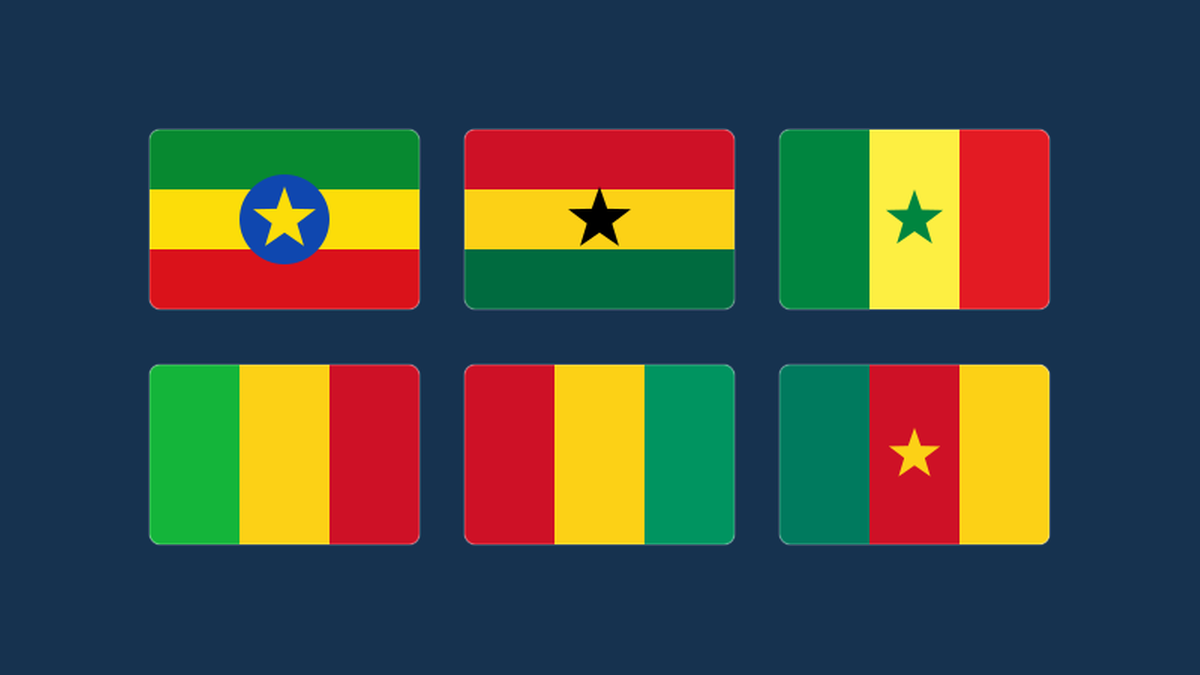
Why Do So Many African Flags Share the Same Colours?
Green, yellow, red. Across Africa, these three colours appear again and again. Their story leads back to Ethiopia, a victory that became a symbol, and the African independence movements of the 20th century.
5 min read