Description
Adoption
- Design adopted c. 1835
- confirmed at independence in 1959
- dimensions fixed on 3 July 1999 (191 years).
Designed byAttributed to Al-Husayn II ibn Mahmud (c. 1831-1835).
Design & Symbolism
Specs plus what each color and emblem means on this flag — tap an element to reveal its meaning.
Colors
Red#E70013 · Pantone 186 CRed, inherited from the Ottoman era, depicts resistance and the blood of the martyrs.
White#FFFFFFThe white disc depicts peace; the crescent and star, Islam.
Symbols & elements
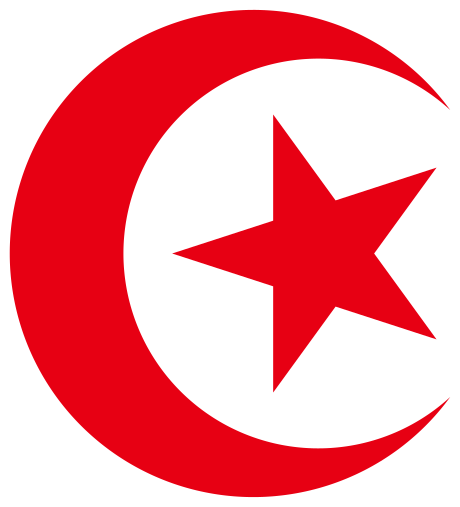
Crescent and starSet in a white disc, the red crescent and five-pointed star mark Islam. The design dates from around 1831 and derives from the Ottoman flag.
Construction details
Proportions 2:3. A red field bearing a white disc at its centre, containing a red crescent and a red five-pointed star.
Construction sheet
Etiquette & protocol
How the flag should be used and displayed with respect.
Specific rules — Tunisia
- The flag is honoured on 20 March, Independence Day.
- It flies on public buildings and at official ceremonies.
Common conventions
- Keep the flag clean and never let it touch the ground.
- Never fly a torn or faded flag — repair or replace it.
- Illuminate the flag if it stays up at night.
- Never use the flag as clothing, packaging or advertising.
- Dispose of a worn flag respectfully, not in the trash.
Did you know?
Its design dates back to the 1830s, making it one of the oldest national flags still in use.