Why Do So Many African Flags Share the Same Colours?
23 Aug 20265 min read
From the vexillum of the Roman cavalry to the flags of today's movements: the story of a modern discipline devoted to an ancient human practice.
In the summer of 1957, a seventeen-year-old from Massachusetts took an internship at United Nations headquarters in New York. He had been obsessed with flags since childhood, and the UN, with its long row of national flags along First Avenue, seemed the obvious place to study them seriously.
He found that nobody there studied flags. Nobody anywhere did, at least not as a subject in its own right.
So Whitney Smith invented one. He took the Latin vexillum and the Greek -logia, and coined a word for a field that did not yet exist: vexillology. He was seventeen. The word first appeared in print two years later, and within a decade it had a journal, a research centre, an international congress and two scholarly associations behind it. Smith founded or co-founded most of them.
This is the story of that discipline: what it is, where it came from, and why a field devoted to pieces of coloured cloth turns out to be worth your attention.
Vexillology is the study of flags: their design, history, symbolism, use, and the rules that govern them.
It sits between the academy and the enthusiast world, and it uses three separate words for three separate roles.
a vexillologist studies flags
a vexillographer designs them
a vexillophile collects and loves them
Few fields maintain that vocabulary so carefully, and the distinction matters. Understanding why a flag works is a historical question. Making one work is a design problem. They call for different skills, though Smith, unusually, practised both.
The term joins two ancient roots.
Vexillum (Latin) was the standard carried by Roman cavalry units. It was not a flag as we picture one today. Rather than hanging from a vertical pole along its side, the cloth was suspended from a horizontal crossbar and hung down like a banner. It identified the unit, not a nation, since nations in the modern sense did not exist.
-logia (Greek) means "the study of".
Put together, the word means exactly what it says: the study of flags.
A small paradox sits in that etymology. Flags in some form are thousands of years old. The word for studying them is younger than television. Vexillology is a modern discipline examining one of humanity's oldest visual habits, and that gap of several millennia is the first thing worth understanding about it.
Before flags came vexilloids, a term Smith also coined, in 1958, for objects that function as flags without quite being them.
In ancient Egypt, poles topped with carved emblems identified different groups and districts. In ancient China, banners coordinated troop movements across battlefields where shouted orders could not carry. In Rome, the vexillum marked out a unit. None of these were flags in the modern sense. Many were carved, rigid, or mounted rather than woven and free-flying. But all of them solved the same problem: identifying a group visually, at a distance, without words.
Every flag ever made is still solving that problem.
Three later shifts turned those objects into flags as we know them.
Heraldry. In medieval Europe, coats of arms and banners tied identity to families and dynasties. Cloth became the carrier of a formal, rule-bound symbolic system.
The sea. During the age of exploration, ships needed to declare nationality and intent to vessels they could not hail. Maritime signalling produced the first sophisticated flag protocols, and much of the design vocabulary still in use today.
The nation-state. Between the seventeenth and nineteenth centuries, flags stopped representing a ruler and began representing a country. That transfer from person to polity is what made the modern national flag possible.
For most of that history, flags were studied only in passing: a footnote in heraldry, a detail in military history, an illustration in art history. There was no dedicated field.
Smith built one, and did it quickly.
1957. He coins the term vexillology at seventeen. It reaches print in 1959.
1961. With Gerhard Grahl, he launches The Flag Bulletin, the world's first periodical devoted to flags. He is twenty-one, and will edit it for fifty years.
1962. He founds the Flag Research Center in Massachusetts.
1965. He convenes the First International Congress of Vexillology with the Dutch scholar Klaes Sierksma, at Muiderberg in the Netherlands.
1967. He helps found the North American Vexillological Association (NAVA).
1969. He helps found the International Federation of Vexillological Associations (FIAV), which still runs the congress every two years.
Along the way he wrote twenty-seven books, including Flags Through the Ages and Across the World (1975), and more than 250 flag entries for Encyclopædia Britannica. He earned a doctorate in political science from Boston University in 1968, since no doctorate in vexillology existed. His dissertation was titled Prolegomena to the Study of Political Symbolism.
In 1966 he designed the national flag of Guyana, adopted at independence and still flying today. The man who invented the word for studying flags also designed one that a country raises every morning. He died in 2016.
The field is broader than looking at flags, and it splits into five reasonably distinct strands.
History. How flags appear, change and disappear, whether national, regional, military, municipal or organisational. Why does a country redesign its flag after independence? What happens to a flag when the state it represented ceases to exist?
Symbolism. What colours and charges are held to mean, and how those meanings shift over time. Official symbolism is often applied after a design is chosen rather than before, which makes the gap between stated meaning and actual origin one of the field's richest seams.
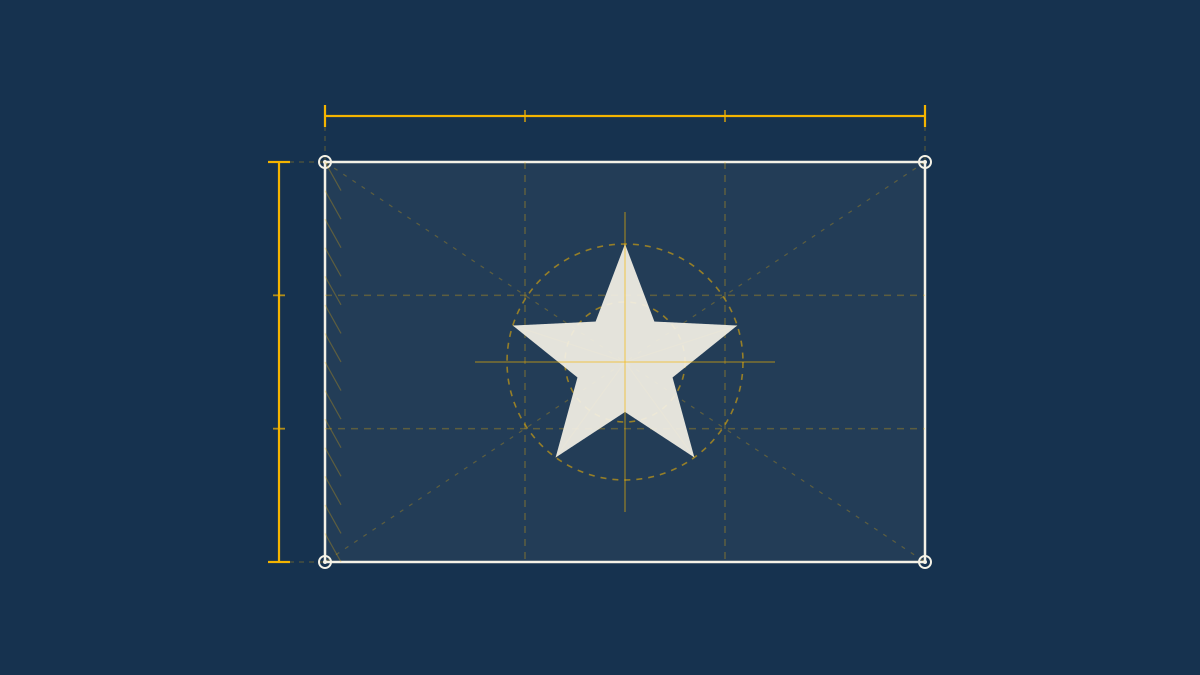
Vexillography. The design side. Flags face constraints almost no other graphic object does. They must read at distance, in motion, from both sides, in poor light, and survive mass reproduction in cloth. That rules out much of what works on a screen or a page.
Protocol. The rules governing display: order of precedence, half-mast conventions, hoisting and lowering, the treatment of worn flags. Dry on the surface, and quietly diplomatic in practice.
Politics and culture. Flags carry identity, which means they carry conflict. This is where vexillology overlaps with political science, sociology and cultural studies, and where it stops being a quiet hobby.
For decades, good flag design was a matter of taste and assertion. Then NAVA decided to test it.
In 2001, the association surveyed its members and the public on the seventy-two flags of US states and Canadian provinces and territories. New Mexico's flag, a simple red Zia sun symbol on yellow, came first. Georgia's, adopted that same year, came last. The press picked up the results, and NAVA's website went from roughly 100,000 hits a month to 100,000 a day.
Alongside the survey, Ted Kaye distilled the accumulated thinking into a sixteen-page booklet, "Good" Flag, "Bad" Flag, built on five principles.
Keep it simple. A child should be able to draw it from memory.
Use meaningful symbolism. The imagery should relate to what it represents.
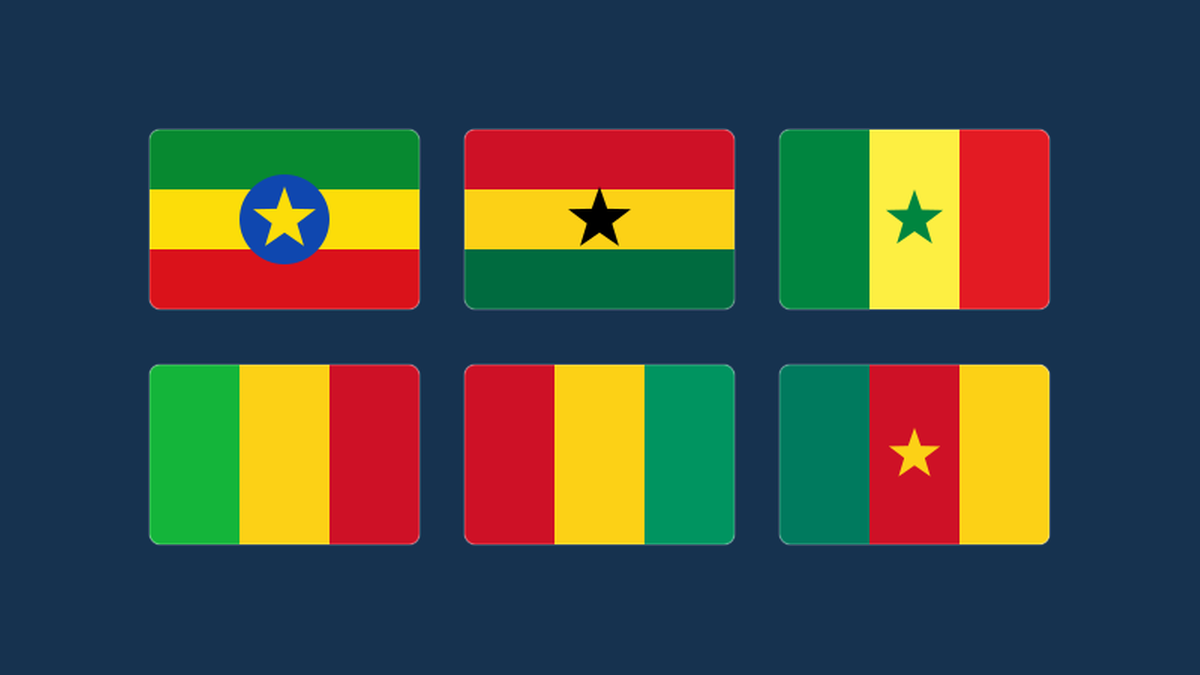
Use two or three basic colours. Draw them from a standard, high-contrast set.
Avoid lettering and seals. Text is unreadable at distance and reverses on the back.
Be distinctive, or be deliberately related. Either stand apart, or signal kinship on purpose.
The principles held up under testing. NAVA's 2004 survey of American city flags matched the booklet's predictions with 89% accuracy, which is unusually good for a set of aesthetic rules.
Their real influence came later. Roman Mars's TED talk on badly designed city flags introduced the subject to millions. Kaye's booklet circulated among Georgia legislators during their 2003 redesign, and Kaye advised Minnesota's redesign commission in 2023. Cities and states across North America have redrawn their flags citing these five rules.
A discipline invented by a teenager in 1957 now shapes what flies over statehouses.
Flags ought to feel obsolete. They are analogue, physical, low-resolution and slow. In practice they remain the fastest identity signal we have.
At an Olympic ceremony, a summit, a border crossing or a protest, a flag communicates instantly and without translation, which is exactly what a Roman cavalry standard did, for the same reason.
They also function as the world's oldest branding system, and often outperform modern logos. Japan's red disc and Switzerland's white cross are as recognisable as any corporate mark, and considerably older.
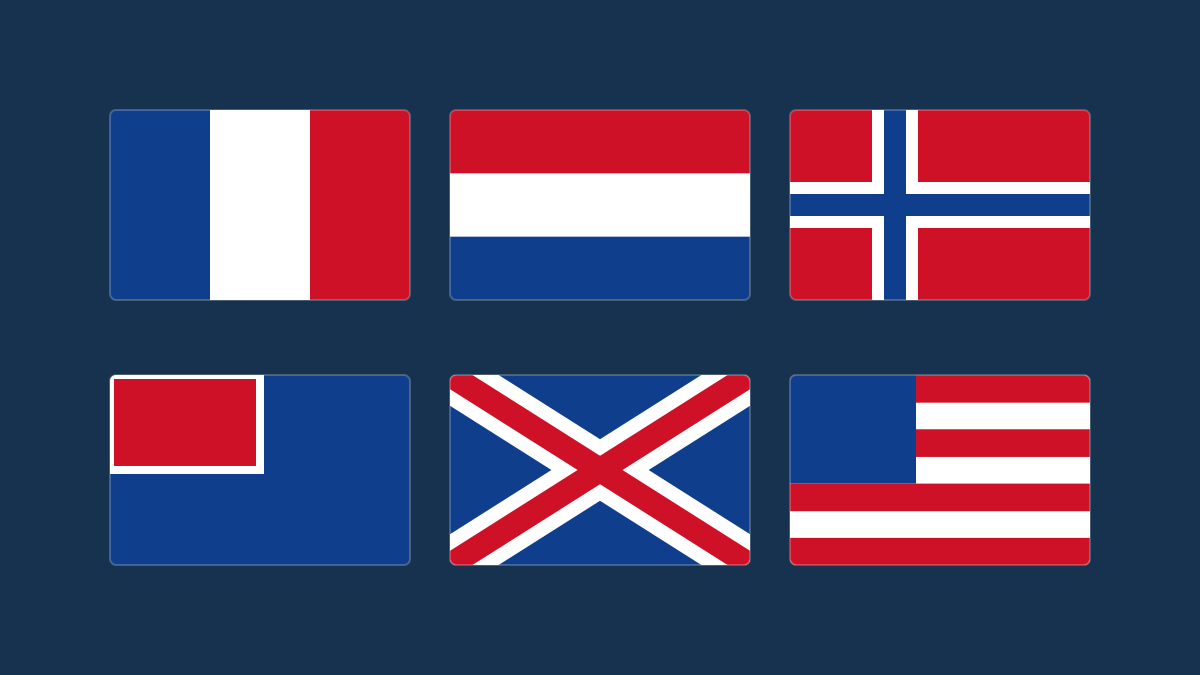
New flags keep appearing, for regions, movements, causes and communities. Each one repeats the design negotiation that produced the Dannebrog and the tricolour: what do we want to say, and what can actually be seen from three hundred metres away?
That is the question vexillology exists to answer. Flags look like simple objects, but they are compressed arguments about identity. Reading them is a way of understanding how societies see themselves, and how they would like to be seen.
Keep exploring